

Symptoms of Typhoid
Typhoid usually builds up slowly over a few days, unlike dengue or flu, which start suddenly.
- Fever that climbs a little higher each day
- Headache, weakness and loss of appetite
- Stomach pain, constipation or loose motions
- A coated tongue
- Feeling very unwell even when the fever dips
Is a Positive Widal Test Enough?
Not on its own. The Widal test is cheap and widely done, but it often shows positive in people who don't have typhoid, especially in India where many people have been exposed before. A blood culture, taken before antibiotics are started, is the most reliable test in the first week. Fever that starts suddenly with severe body ache is more likely to be dengue; see dengue treatment in Panchkula.
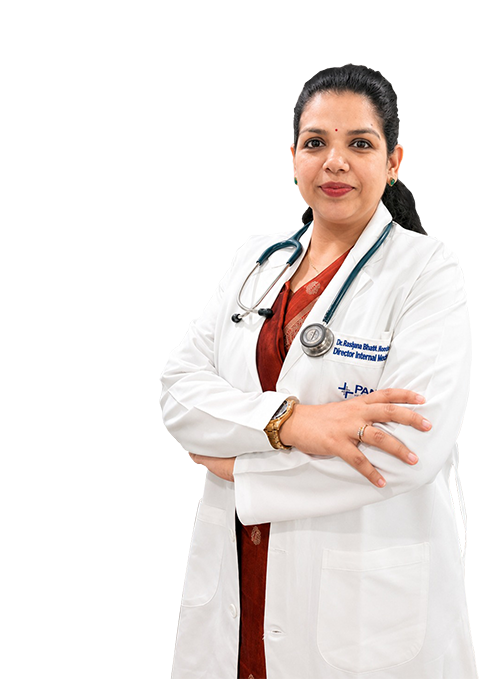
Dr. Ranjana Bhatt looks at the whole picture: how the fever behaves, your symptoms, the blood count and the culture, rather than treating a Widal report alone.
Treatment
- An antibiotic chosen with local resistance patterns in mind. Many older antibiotics no longer work well against typhoid in North India.
- Finish the full course, even if you feel fine after a few days. Stopping early is the commonest reason for relapse.
- Paracetamol for fever, lots of fluids and rest.
- Admission at Paras Health Panchkula if you can't keep fluids down, are very weak, or have severe stomach pain.
Food During and After Typhoid
Eat small, soft and freshly cooked meals: khichdi, dal, curd, boiled rice, idli, bananas, boiled potatoes and soups. Avoid spicy, oily and raw food, and outside food and water, until you have fully recovered. Your appetite usually returns over one to two weeks. For other causes of fever, see the fever doctor in Panchkula page.
Typhoid in Children, Older Adults and People With Diabetes
Typhoid can be harder on young children, older adults and people with diabetes, kidney disease or a weak immune system. They are more likely to get dehydrated and may need closer follow-up or admission. Stomach pain that suddenly gets much worse, vomiting blood or black stools are emergencies and need hospital care straight away. People with diabetes should keep a close eye on their sugar; see diabetes doctor in Panchkula.
After recovery, a small number of people keep carrying the bacteria without symptoms. If you handle food for others, ask your doctor whether a follow-up stool test is needed.
Preventing Typhoid
- Drink boiled or filtered water
- Avoid cut fruit, salads and chutneys from street stalls
- Wash hands before eating and after using the toilet
- Ask about the typhoid vaccine, especially before travel
Why Typhoid Is Getting Harder to Treat
Over the years, typhoid bacteria have become resistant to several antibiotics that used to work well, and drug-resistant typhoid has been reported in parts of India and neighbouring countries. This is a big reason doctors avoid prescribing antibiotics for every fever without a clear reason.
It is also why you should take the exact antibiotic you are given, for the full number of days. Leftover tablets from an earlier illness, or medicines suggested over the counter, can make the problem worse.
Complications to Watch For
Most people recover fully with timely treatment. Untreated or poorly treated typhoid can, in the second or third week, lead to bleeding in the gut or a hole in the intestine, which needs emergency surgery.
Warning signs are sudden, severe stomach pain, a hard and tender tummy, vomiting blood, black or bloody stools, extreme weakness or confusion. These are emergencies. Go straight to a hospital.
Going Back to Work or School
Once the fever has settled and you are eating normally, most people can return to a desk job or college about a week after finishing antibiotics. Physical work and the gym can wait a little longer until your strength returns. Children should stay at home until they are fever-free and eating well.
Keep washing your hands carefully for a few weeks. If you work in a kitchen or food business, check with your doctor before you go back to handling food for others.
Protecting the Rest of the Family
Typhoid spreads through food and water contaminated by an infected person, so a few habits at home protect everyone. The person who is ill should wash hands well with soap after using the toilet and before eating, and ideally shouldn't cook for the family until they have recovered.
Use boiled or filtered water for drinking and for washing fruits. Clean the toilet and taps regularly. If another family member develops fever in the next couple of weeks, get them checked early rather than assuming it is a simple viral fever. The typhoid vaccine is a sensible option for children and adults in the household.
Typhoid or Something Else?
Several illnesses can look like typhoid in the first few days, including dengue, malaria, urine infections, hepatitis and even TB when the fever drags on. That is why the doctor looks at how the fever started, how it behaves day to day, and the blood count, instead of relying on a single test. Getting the diagnosis right avoids unnecessary antibiotics.
Frequently Asked Questions
How long does typhoid take to recover?
Fever usually settles within three to five days of the right antibiotic. Full strength can take two to three weeks.
Can typhoid come back?
Yes, in a small number of people, usually when the antibiotic course is incomplete or the wrong antibiotic was used.
Is the Widal test reliable?
Not very. A blood culture taken before antibiotics is far more reliable.
Is typhoid contagious?
It spreads through food or water contaminated by an infected person. Good hand hygiene protects your family.
Is there a vaccine for typhoid?
Yes. The typhoid conjugate vaccine protects for several years. Ask at your visit.
Medically reviewed by Dr. Ranjana Bhatt, MBBS, DNB (General Medicine), Associate Director, Internal Medicine, Paras Health Panchkula.