

Common Thyroid Problems
- Hypothyroidism (underactive thyroid): the most common one. Tiredness, weight gain, constipation, dry skin, heavy periods and low mood.
- Hyperthyroidism (overactive thyroid): weight loss despite eating well, palpitations, sweating, anxiety and tremors.
- Subclinical thyroid disease: TSH is slightly off but T4 is normal. Not everyone needs tablets; it depends on the numbers and your symptoms.
- Thyroid swelling (goitre) or nodules: these need an ultrasound and sometimes a referral.
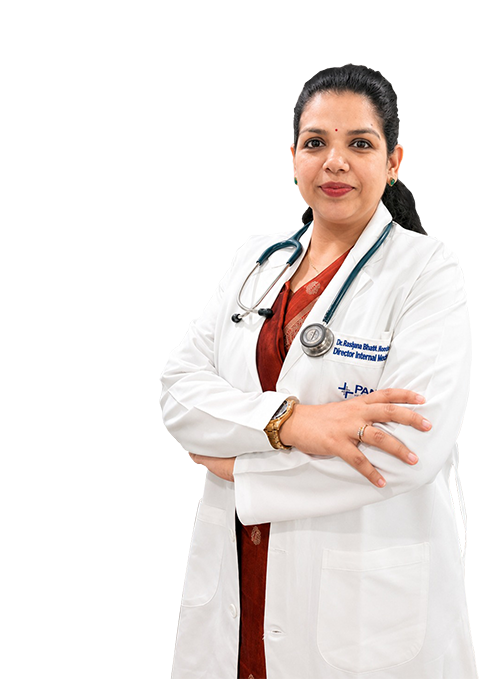
Dr. Ranjana Bhatt completed a fellowship in Endocrinology and Metabolic Diseases at VMMC and Safdarjung Hospital, Delhi, so thyroid problems are a regular part of her practice. Diabetes and thyroid problems often turn up together; see diabetes doctor in Panchkula.
Understanding Your TSH Report
TSH is the hormone that tells the thyroid how hard to work. A high TSH usually means the thyroid is underactive. A low TSH usually means it is overactive. The normal range is roughly 0.4 to 4.5 mIU/L in most labs, but the target can be different in pregnancy and in older people.
One abnormal report is not enough to start lifelong treatment. A recent illness, some medicines and even biotin supplements can throw the numbers off, so a repeat test is often the first step.
Treatment and Follow-up
For an underactive thyroid, treatment is a daily tablet of thyroxine. Take it on an empty stomach with water, 30 to 60 minutes before tea or breakfast, and keep calcium and iron tablets at least four hours apart. Small details like this explain why many people stay tired despite 'taking their tablet'.
TSH is rechecked six to eight weeks after any dose change, then once or twice a year once things are stable. An overactive thyroid needs a different approach, with medicines to calm the gland and, in some cases, a referral for radio-iodine or surgery.
Symptoms That Are Easy to Blame on Something Else
Thyroid problems are often missed because the symptoms look like everyday stress or ageing. Women are told they are tired because of work or children. Older people are told it is just age. If you have two or three of the symptoms below for more than a few weeks, a simple TSH test is worth doing. For tiredness without a clear cause, see a doctor for weakness and fatigue.
- Feeling cold when others are comfortable
- Hair thinning and dry skin
- Slow thinking or poor memory
- Puffy face or swelling around the eyes
- Irregular or heavy periods
- Feeling anxious, shaky or unable to sleep (overactive thyroid)
Thyroid, Weight and Women's Health
Thyroid problems are far more common in women. They can affect periods, fertility and pregnancy, and they often show up after childbirth or around menopause. If you are planning a pregnancy and take thyroid tablets, get your TSH checked before you conceive, as the dose often needs to go up early in pregnancy. Low energy can also come from low B12, covered under vitamin B12 deficiency treatment.
Thyroid treatment helps with weight, but it is rarely the whole answer. If weight is a concern, sugar, cholesterol and liver tests are worth doing too.
Living With Thyroid Medicine Day to Day
The tablet works best when you take it the same way every day. Many people keep the strip next to their toothbrush and take it with water as soon as they wake up. If you miss a dose, take it when you remember the same day, but don't double up the next morning.
Switching brands can change how much hormone your body absorbs, so try to stay with the same brand and mention it if the chemist gives you a different one. Calcium, iron, antacids and some acidity medicines reduce absorption, as can soy or a very high-fibre breakfast taken right after the tablet. You don't have to give these up, just keep a gap.
Thyroid Antibodies and Family History
An autoimmune condition called Hashimoto's thyroiditis is the most common cause of an underactive thyroid. A blood test for anti-TPO antibodies shows whether it is behind your thyroid problem. A positive result doesn't always mean you need tablets straight away, but it does mean your TSH should be checked once a year.
Thyroid problems run in families. If your mother or sister has thyroid disease, it is worth getting your own TSH checked even if you feel well.
When a Thyroid Swelling Needs Attention
A lump in the front of the neck is usually harmless, but it still needs an ultrasound. See a doctor sooner if the swelling is growing quickly, feels hard, or comes with a change in voice, trouble swallowing or difficulty breathing. Most nodules only need to be watched over time. A few need a needle test (FNAC), and if surgery is needed you will be referred to an ENT or endocrine surgeon.
Thyroid and Your Heart, Bones and Cholesterol
An underactive thyroid can push up cholesterol, slow the heart rate and cause swelling of the face and legs. Correcting the thyroid often brings cholesterol down on its own, which is why TSH is checked before starting cholesterol medicine. An overactive thyroid, on the other hand, can cause palpitations and an irregular heartbeat, especially in older people.
Too much thyroid medicine over many years can thin the bones. This is another reason why regular TSH checks matter, so that the dose stays right for you rather than being left unchanged for years.
Thyroid in Children and Teenagers
Thyroid problems can also affect children. Slow growth, poor concentration at school, constant tiredness, weight gain or delayed periods in girls can sometimes be thyroid-related. A simple TSH test answers the question. Children with thyroid problems are usually managed together with a paediatrician.
Frequently Asked Questions
Is thyroid medicine for life?
For most people with hypothyroidism, yes. The good news is that it is a small, safe daily tablet once the dose is right.
Can I take my thyroid tablet with tea?
No. Take it with plain water and wait 30 to 60 minutes before tea, coffee or breakfast.
Can thyroid problems cause weight gain?
An underactive thyroid can add a few kilos, mostly from water retention. Large weight gain usually has other causes as well.
Should I get my thyroid checked if I feel tired?
Yes, along with haemoglobin, vitamin B12, vitamin D and sugar. These are the common causes of tiredness.
Do you treat patients from Chandigarh and Mohali?
Yes. The clinic in Sector 20, Panchkula runs evening OPD Monday to Saturday and a Sunday morning OPD.
Medically reviewed by Dr. Ranjana Bhatt, MBBS, DNB (General Medicine), Associate Director, Internal Medicine, Paras Health Panchkula.