

Why See an Internal Medicine Doctor for Diabetes?
Diabetes rarely travels alone. By the time it is picked up, many people also have high BP, raised cholesterol, a fatty liver or thyroid trouble. An internal medicine physician looks after all of these together, so your medicines work with each other instead of against each other. If your liver enzymes are raised, read about fatty liver treatment in Panchkula; if your TSH is off, see thyroid treatment in Panchkula.
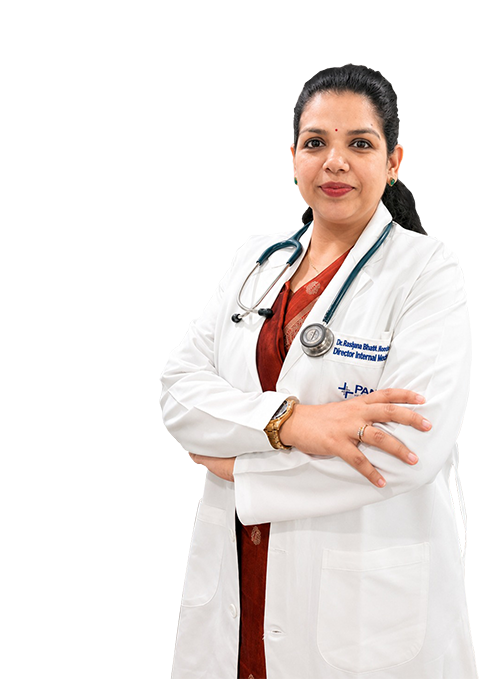
Dr. Ranjana Bhatt holds a DNB in General Medicine, a fellowship in Endocrinology and Metabolic Diseases from VMMC and Safdarjung Hospital, Delhi, and a certificate in Diabetes and Metabolic Care from the Royal College of General Practitioners. Diabetes makes up a large part of her everyday work.
Who Should Get Their Sugar Checked?
You should get tested if you notice any of these:
- Feeling thirsty all the time or passing urine often, especially at night
- Tiredness that doesn't go away with rest
- Cuts or infections that take long to heal
- Tingling or burning in the feet
- Blurred vision
- Unplanned weight loss
Even without symptoms, get a yearly test if you are over 35, overweight, have a parent with diabetes, or had high sugar during pregnancy. Type 2 diabetes is very common in North India and often runs silently for years.
How Diabetes Is Diagnosed
A fasting sugar of 126 mg/dL or more, a sugar of 200 mg/dL or more two hours after glucose, or an HbA1c of 6.5% or more, confirmed on repeat testing, points to diabetes. An HbA1c between 5.7% and 6.4% means prediabetes. That is the stage where lifestyle changes can still turn things around.
At the first visit you can expect a check of weight, BP and feet, a look at your old reports, and a short list of tests: HbA1c, kidney function, urine for protein, lipid profile and sometimes thyroid and liver tests.
What Treatment Looks Like
There is no single plan that suits everyone. A 35-year-old office worker and a 70-year-old with kidney disease need very different targets and very different medicines.
- Medicines: tablets are chosen based on your sugar levels, weight, kidney function and heart risk. Newer medicines can also protect the heart and kidneys.
- Insulin: if it is needed, you'll be shown how to take it, how to adjust it and how to avoid lows. Starting insulin is not a sign that you have failed.
- Food: no crash diets. Practical changes to Indian meals, roti and rice portions, sweets during festivals and eating out.
- Activity: a walk after meals does more than most people expect.
- Follow-up: HbA1c every three months until it settles, then less often.
Checking for Complications
High sugar slowly affects the eyes, kidneys, nerves, heart and feet. These changes are silent at first. That is why a yearly eye check, kidney tests, a foot examination and a heart risk review are part of diabetes care, not extras. Keeping BP in range matters as much as sugar, so high BP treatment in Panchkula is part of the same plan.
If anything needs a specialist, such as an eye surgeon or a kidney specialist, you'll be referred with your reports so you don't have to start from scratch. Admission, if ever needed, is at Paras Health Panchkula.
Patients From Chandigarh and Mohali
Many people come to the Sector 20 clinic from Chandigarh, Zirakpur and Mohali, mostly for the evening OPD (Monday to Saturday, 5 to 7 PM) and the Sunday morning OPD (11 AM to 2 PM). Diabetes needs regular follow-up, so a clinic you can reach after work makes a real difference. Travel details are on the pages for an internal medicine doctor near Chandigarh and a general physician near Mohali.
Low Sugar (Hypoglycaemia): What to Do
Some diabetes medicines, especially insulin and older tablets like glimepiride, can push sugar too low. Shaking, sweating, a racing heart, sudden hunger, confusion or feeling faint are the usual signs.
If your sugar is below 70 mg/dL, take something sweet straight away: three teaspoons of sugar or glucose in water, or half a glass of fruit juice. Check again after 15 minutes and repeat if it is still low. Once it settles, eat a proper snack. Tell your doctor about every low reading, because it usually means a dose needs to change.
Checking Sugar at Home
A home glucometer is one of the most useful things you can own if you have diabetes. Unless you are on insulin, you don't need to check many times a day. For most people on tablets, a few fasting readings and a few readings two hours after meals each week give a clear picture.
Write the readings down with the date and time, and bring them to your visit. Patterns matter far more than one odd reading after a wedding dinner.
- Wash and dry your hands before pricking
- Use the side of the fingertip, it hurts less
- Check the expiry date on the strips
- Use a fresh lancet as often as you can
Festivals, Fasting, Travel and Sick Days
Navratri fasts, Karva Chauth, Ramzan, weddings and long journeys all upset routine. If you plan to fast, speak to your doctor a couple of weeks before, because medicine timings and doses often need to change for those days.
When travelling, keep your medicines in hand luggage, carry a few glucose tablets or sweets, and don't skip meals because you are on the road. Sick days need their own plan as well: keep drinking fluids, check your sugar more often, and call if you can't eat or keep anything down.
Looking After Your Feet
High sugar slowly reduces feeling in the feet, so a small cut or a shoe bite can turn into a wound without you noticing. Look at your feet every evening, including between the toes, or ask someone at home to check them for you. Wash them in lukewarm water, dry them well and use a moisturiser, but not between the toes.
Avoid walking barefoot, even at home or in the temple courtyard. Choose soft, well-fitting shoes, and cut nails straight across. If you notice a blister, colour change, swelling or a wound that isn't healing, show it to a doctor within a day or two rather than waiting.
Frequently Asked Questions
What is a normal sugar level?
Fasting sugar under 100 mg/dL and sugar under 140 mg/dL two hours after a meal are normal. HbA1c under 5.7% is normal.
Can type 2 diabetes be reversed?
In the early years, some people bring their sugar back to normal with weight loss and lifestyle changes. It needs regular checks, because it can come back.
Do I have to take diabetes medicine for life?
Not always, but most people with established diabetes need some medicine long term. Doses are often reduced as weight and lifestyle improve.
Is insulin harmful for the kidneys?
No. High sugar damages the kidneys, not insulin. Insulin is often the safest option when kidney function is reduced.
How often should I see the doctor?
Every three months until your sugar is stable, then every three to six months.
Medically reviewed by Dr. Ranjana Bhatt, MBBS, DNB (General Medicine), Associate Director, Internal Medicine, Paras Health Panchkula.