

Symptoms of Dengue
Dengue usually starts suddenly, three to ten days after a mosquito bite. Common symptoms are:
- High fever, often 102°F or more
- Severe body ache and joint pain
- Pain behind the eyes and headache
- Nausea, vomiting and loss of appetite
- A red rash, often appearing a few days in
Warning Signs: Go to Hospital Straight Away
These usually appear around day three to seven, often when the fever is settling. Do not wait for the next OPD if you notice:
- Severe stomach pain or vomiting that won't stop
- Bleeding from the gums or nose, black stools, or red spots on the skin
- Feeling very drowsy, restless or confused
- Cold, clammy hands and feet
- Passing very little urine
- Breathlessness
Patients who need admission are looked after at Paras Health Panchkula.
Tests for Dengue
In the first five days, an NS1 antigen test is the most useful. After day five, a dengue IgM test helps. A complete blood count is repeated every day or two to track platelets and haematocrit (how concentrated the blood is). Fever with chills that comes and goes may be malaria instead; see malaria treatment in Panchkula.
A falling platelet count worries everyone, but the platelet number alone does not decide treatment. Rising haematocrit, low BP and warning signs matter more. Most patients never need a platelet transfusion.
How Dengue Is Treated
There is no antiviral medicine for dengue. Treatment is about supporting the body until it recovers: If the fever lasts beyond a week, typhoid needs to be ruled out; see typhoid treatment in Panchkula.
- Plenty of fluids: water, ORS, coconut water, soups and juices. Aim to pass urine every four to six hours.
- Paracetamol for fever, at the dose your doctor advises.
- Avoid painkillers like ibuprofen, diclofenac and aspirin. They raise the risk of bleeding.
- Rest, and a blood count at the intervals your doctor sets.
Papaya leaf juice and goat milk are popular, but there is no strong proof they raise platelets. If you want to take them, do it alongside proper monitoring, not instead of it.
Looking After Someone With Dengue at Home
- Keep a simple chart: temperature, fluids taken and the number of times they passed urine
- Offer something to drink every hour while they are awake
- Give paracetamol only at the dose and interval advised
- Get the blood count done on the days your doctor asks, even if they feel better
- Keep the room mosquito-free so the infection doesn't spread to others in the family
The fever coming down is not always the end of the risk. Days four to six are when warning signs usually show up, so keep watching closely through that stretch. For general fever care, see viral fever treatment in Panchkula.
Who Needs Closer Watch?
Older adults, pregnant women, babies and people with diabetes, kidney disease, heart disease or high BP are more likely to have complications. They should be seen early, even if they feel only mildly unwell.
Dengue Myths Worth Clearing Up
- "Low platelets always need a transfusion." Most patients recover without one.
- "Kiwi, papaya leaf or goat milk cures dengue." There is no cure. Fluids and careful monitoring are what keep people safe.
- "Once the fever is gone, the danger is over." The day or two after the fever drops needs the closest watch.
- "Antibiotics will help." Dengue is a virus. Antibiotics have no effect on it.
Recovery After Dengue
Most people feel weak for two to three weeks after the fever. Appetite comes back slowly, and some notice hair fall a month or two later, which usually grows back. An itchy rash on the palms and soles is also common during recovery.
Go back to work and exercise gradually. If your platelet count dropped very low, your doctor may want one more blood count after you feel better, just to be sure it has recovered.
Protecting Your Home and Society
The dengue mosquito breeds in small amounts of clean, still water and bites mostly during the day, especially early morning and late afternoon. Coolers, flower pot trays, uncovered water tanks, old tyres and even bottle caps on rooftops are common breeding spots. Empty and scrub them once a week.
In apartment societies, the most useful step is a weekly check of basements, terraces and construction areas. One neglected corner can affect the whole building.
Diet During Dengue
Appetite is usually poor, so small, frequent meals work better than three large ones. Light foods such as khichdi, dal, curd rice, idli, soups, boiled vegetables and fruits are easy on the stomach. Fluids matter most: water, ORS, coconut water, lassi, nimbu pani and fresh juices all count.
Avoid oily, spicy and packaged food until recovery. There's no need to force food if the patient can't eat much for a day or two, as long as they are drinking well and passing urine regularly. Alcohol should be avoided completely during dengue and for a couple of weeks afterwards.
Dengue in People With Other Illnesses
People with diabetes, heart disease, kidney disease or high BP need extra care during dengue. Some regular medicines, like blood thinners and certain BP or diabetes tablets, may need to be paused or adjusted for a few days. Don't make these changes on your own; ask your doctor which medicines to continue and which to hold until you recover. A short phone call to the clinic is usually enough to sort this out.
Frequently Asked Questions
What platelet count is dangerous in dengue?
A count below 20,000, or any count with active bleeding, needs hospital care. But warning signs and haematocrit matter as much as the platelet number.
Which test should I get for dengue?
NS1 antigen in the first five days of fever, dengue IgM after day five, plus a complete blood count.
Can I get dengue twice?
Yes. There are four types of dengue virus, and a second infection with a different type can be more severe.
How long does dengue take to recover?
Fever usually lasts five to seven days. Tiredness can last another two to three weeks.
Can dengue be treated at home?
Most cases can, with fluids, paracetamol and regular blood counts. Anyone with warning signs needs hospital care.
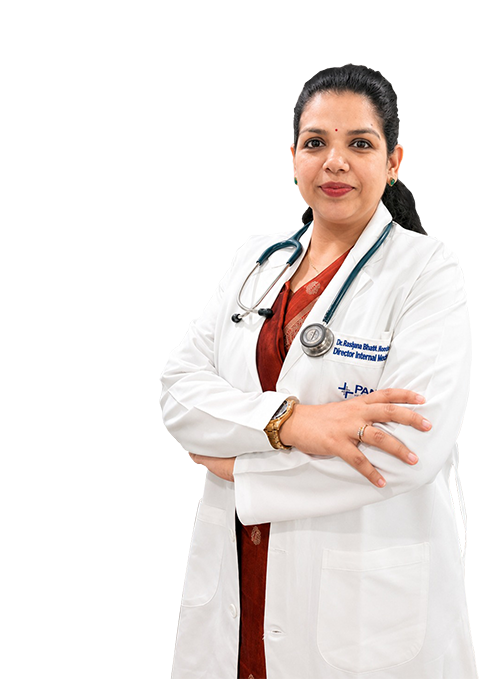
Medically reviewed by Dr. Ranjana Bhatt, MBBS, DNB (General Medicine), Associate Director, Internal Medicine, Paras Health Panchkula.