
What Exactly Is High Blood Pressure?
High blood pressure, or hypertension, happens when the force of blood against your artery walls stays higher than it should, consistently. A normal reading sits around 120/80 mmHg — once it stays at 140/90 mmHg or above on a regular basis, it's something worth paying attention to.
"Don't dismiss high BP just because it doesn't hurt — that's exactly what makes it so dangerous."
— Dr. Ranjana Bhatt, Internal Medicine, Paras Health Panchkula
Why It's Called a "Silent" Risk
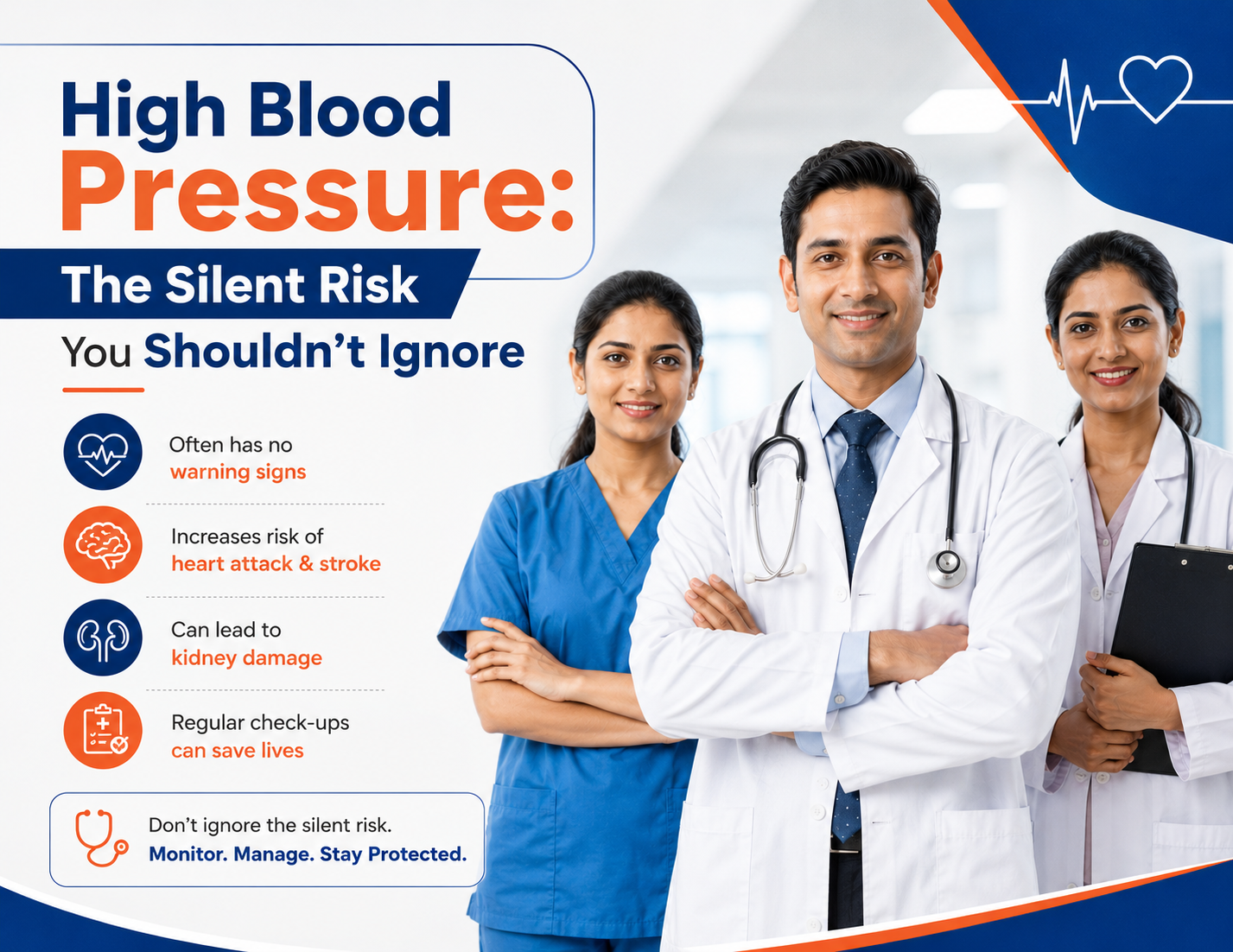
In most cases, high blood pressure doesn't show any signs at all in its early stages. Many people only find out during a routine checkup, or worse, after something serious like a heart attack or stroke has already happened. That's exactly why regular blood pressure checks shouldn't be treated as optional.
- Most cases show no symptoms in the early stages
- It can go undiagnosed for years
- It gradually damages the heart, kidneys, and eyes
- It's often only caught once a bigger problem shows up
Common Causes of High Blood Pressure
What triggers high BP can vary from person to person, but some of the most common contributing factors include:
- A family history of high blood pressure
- A diet high in salt and processed foods
- Obesity and a lack of physical activity
- Chronic stress and poor sleep
- Smoking and excessive alcohol consumption
- Diabetes or other underlying kidney conditions
- Natural age-related increase in risk
Quick Tip
Frequent headaches, dizziness, or a racing heartbeat can be early signs of high BP — get your blood pressure checked right away if you notice these.
When to See a Doctor Right Away
High BP usually stays quiet, but there are certain signs you should never brush aside:
- Frequent, intense headaches or dizziness
- Shortness of breath or heaviness in the chest
- Blurred vision or sudden darkness in your field of view
- Recurring nosebleeds
- A sudden fast or irregular heartbeat
- Numbness or weakness in the arms or legs
Diagnosis and the Tests You May Need
Based on your history and BP readings, an experienced internal medicine doctor will usually recommend a few basic tests to understand what's really driving the numbers:
Ways to Keep Your Blood Pressure in Check
Alongside any medication, a few lifestyle habits can make a real difference in keeping your numbers under control:
- Cut back on the salt in your daily diet
- Get at least 30 minutes of walking or light exercise daily
- Keep your weight within a healthy range
- Stay away from smoking and limit alcohol
- Try meditation or yoga to manage stress
- Get your blood pressure checked regularly
When to See a Doctor About Your BP
One high reading at the chemist doesn't mean you have hypertension, and one normal reading doesn't mean you're in the clear. What matters is the pattern. Dr. Ranjana Bhatt usually starts with a week or two of home readings, then looks at your family history, weight, salt intake, sleep and any other medicines you take. A few basic blood and urine tests show whether the kidneys or heart are already under strain. If you do need medicine, the aim is the lowest dose that keeps your BP steady, with follow-ups to adjust it. You can see her at the clinic in Sector 20, Panchkula, or at Paras Health Panchkula. Read more about high BP treatment in Panchkula.
In Short
High blood pressure rarely announces itself, so the only way to know is to check. If you're over 30, get it measured at least once a year. If you have diabetes, kidney trouble or a family history of heart disease, check more often. And if your home readings keep crossing 140/90, book a visit rather than waiting for symptoms to show up. A yearly full body checkup in Panchkula is an easy way to keep track. If you also have high sugar, a diabetes doctor in Panchkula can look after both together.