

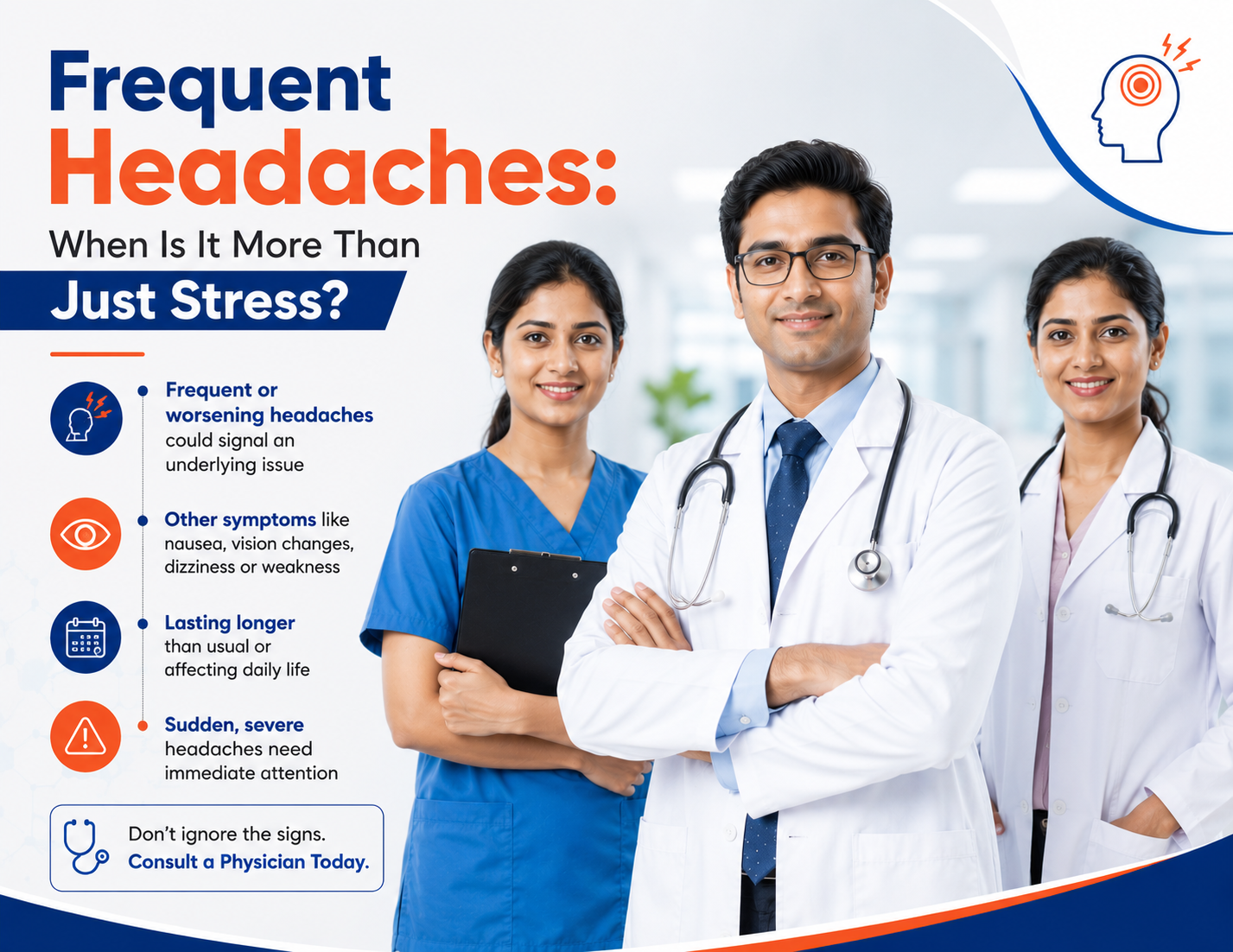
How Often Is "Too Often" for Headaches?
An occasional headache after a stressful day isn't usually a cause for worry. But when headaches start showing up more than a couple of times a week, last longer than usual, or begin interfering with your work and sleep, they've moved past the "normal, stress-related" category and into something that deserves a closer look.
"A headache that keeps coming back isn't just bad luck — it's your body repeating a message you haven't looked into yet."
— Dr. Ranjana Bhatt, Internal Medicine, Paras Health Panchkula
Stress-Related Headaches vs. Something More
Tension headaches caused by stress usually feel like a tight band around the head, ease up with rest, and don't come with other symptoms. Frequent headaches that go beyond stress tend to look different:
- They occur more than twice a week over several weeks
- They don't fully go away with rest or common painkillers
- They're paired with nausea, vision changes, or sensitivity to light
- They wake you up at night or are worse in the morning
- They gradually get more intense over time
Common Causes Behind Frequent Headaches
Beyond everyday stress, there are several underlying factors that can lead to recurring headaches: During the monsoon, headache with high fever and body ache can be an early sign of dengue; see dengue treatment in Panchkula.
- Poor sleep quality or an irregular sleep schedule
- Dehydration or skipping meals
- Eye strain from excessive screen time
- Uncontrolled high blood pressure
- Sinus infections or chronic congestion
- Overuse of painkillers, which can itself trigger rebound headaches
- Underlying neurological or vascular conditions in rarer cases
Quick Tip
Keeping a simple headache diary — noting when they occur, how long they last, and what you were doing beforehand — can help your doctor spot patterns much faster.
When to See a Doctor Right Away
Most frequent headaches are manageable and not dangerous, but a few warning signs mean it's time to stop self-treating and get checked:
- A sudden, severe headache unlike any you've had before
- Headache along with fever, stiff neck, or confusion
- Vision problems, slurred speech, or weakness on one side
- Headaches that start after a head injury
- A headache that wakes you up from sleep or worsens with coughing
- New headaches appearing for the first time after age 50
Diagnosis and the Tests You May Need
Based on your symptoms and history, an experienced internal medicine doctor may recommend some of the following to rule out underlying causes:
Ways to Manage and Reduce Frequent Headaches
Once serious causes have been ruled out, a few daily habits can significantly cut down how often headaches show up:
- Stick to a consistent sleep schedule
- Stay hydrated and avoid skipping meals
- Take regular breaks from screens throughout the day
- Cut back on caffeine and avoid overusing painkillers
- Practice stress-relief techniques like deep breathing or short walks
- Get your blood pressure and eyesight checked periodically
When Headaches Need a Doctor
Most headaches come from stress, poor sleep, skipped meals, long hours on a screen or, quite often, too many painkillers. Some, though, are linked to high blood pressure, eye strain or sinus trouble, and a few point to something more serious. Before your visit, jot down when the headaches start, how long they last and what helps. It makes the consultation far more useful. Dr. Ranjana Bhatt will check your BP, go through your medicines and ask about warning signs before deciding whether you need any tests or a specialist referral. Since high BP is a common hidden cause, see our page on high BP treatment.
In Short
An occasional headache is part of life. A headache every few days is not something to keep treating with tablets from the chemist. Go to a doctor straight away if a headache is sudden and severe, or comes with fever and a stiff neck, blurred vision, weakness or confusion. If your headaches simply keep coming back, book a regular consultation and find out why. If tiredness comes along with the headaches, see a doctor for weakness and fatigue.